Bedding Guide
Sheets That Stay Put: A Practical Guide to Adjustable Bed Fit
An adjustable base brings movement to the bed: the head rises, the foot lifts, and the mattress changes shape beneath the bedding. The right fitted sheet should move with it. Learn how to measure mattress depth, assess pocket fit, understand elastic and fabric, and troubleshoot the small details that keep sheets smooth and secure.
Why adjustable beds test a sheet’s fit
A bed made for stillness asks little of its sheets. An adjustable bed is different. When the base bends, the mattress articulates at several points, changing the angles and distances between its surface and edges. Bedding that rests neatly on a flat mattress may be tugged toward the head or foot when the bed is raised. Corners can creep upward, fabric may gather into folds, and a once-smooth surface can become slack in one area and tight in another.
This movement does not necessarily mean the sheet is poorly made. It may simply be designed for a different setup, or its dimensions may not match the mattress after a topper or pad has been added. Finding sheets for adjustable beds is therefore a matter of fit and flexibility, not just softness or thread count. A secure sheet must accommodate the mattress’s actual dimensions while allowing it to move without excessive tension.
A well-fitted surface also makes everyday bed-making easier. It can reduce disruptive bunching and help keep the bedding comfortable as the base changes position. The aim is not to make every fold disappear: some movement is natural. The aim is a fitted sheet that stays anchored, lies reasonably smooth, and does not restrict the bed’s normal articulation.
Begin with the mattress—not the label
Bed-size names such as queen or king are useful starting points, but they do not describe every detail that determines fit. Mattress dimensions can vary, and a mattress may sit beneath a pad, protector, or topper that adds height. Before choosing a fitted sheet, check the mattress’s width and length, then measure its depth with all layers that the sheet needs to cover in place.
Measure from the mattress’s lowest edge to the highest point of its sleep surface, including any cushioning layer. If a topper is secured beneath the fitted sheet, include its thickness. A mattress protector that sits under the sheet also contributes to the total. For a reliable measurement, use a flexible tape measure and keep it close to the side of the bed rather than stretching it diagonally across a rounded corner.
It is helpful to write down the complete setup rather than relying on memory: mattress size, mattress depth, topper thickness, and the combined height of the layers. Repeat the measurements on more than one side if the mattress has a pillow top or another uneven surface. These details matter because a sheet advertised for a particular bed size may still have too little pocket depth—or an overly loose pocket—for the finished mattress.
- Measure the mattress length and width. Confirm the actual dimensions rather than assuming a standard size.
- Measure the full depth. Include any topper, mattress pad, or protector that the fitted sheet must cover.
- Check the corners. A thick or rounded edge can affect how much fabric is needed to wrap beneath the mattress.
- Note the finished bed setup. Use these measurements when comparing product specifications and pocket-depth ranges.
Pocket depth: enough coverage, not excess fabric
The pocket depth of a fitted sheet describes how far its corners are designed to wrap over the mattress. A shallow pocket may not reach far enough under a tall mattress. When the adjustable base moves, the tension can pull the elastic over the corner and release it. The opposite problem is also possible: a pocket with substantially more depth than the mattress may leave surplus fabric beneath the bed, creating a loose or uneven fit.
Look for the manufacturer’s stated pocket depth or mattress-depth range, and compare it with the total depth you measured. Some sheets list a single pocket measurement; others specify a range that accounts for mattresses of different heights. A range can be useful when a setup includes a pad or topper, but the sheet still needs to fit snugly at the lower end of its stated capacity.
Consider how the sheet is intended to be used. If it must cover both a mattress and a thick topper, the pocket should accommodate their combined height. If the topper is held in place separately and the fitted sheet covers only the mattress, measure accordingly. The correct choice is the one that fully covers the layers you intend it to cover without leaving corners loose.
Pocket depth alone is not a guarantee of a secure fit. Two sheets with similar measurements may behave differently because of elastic placement, fabric stretch, corner construction, or the mattress’s shape. Treat depth as an important specification, then assess the whole design and test the sheet through the bed’s range of motion.
Elastic and corner construction
Elastic is the sheet’s anchor. It helps hold the corners beneath the mattress as the surface shifts, and its placement can influence how evenly the sheet stays in position. Some fitted sheets use elastic around the entire perimeter; others concentrate it at the corners. Either construction may work, but a strong, close fit matters more than a feature name by itself.
When inspecting a sheet, look for elastic that is distributed evenly and sewn securely into the fabric. The corners should be shaped to cover the mattress rather than merely stretched over it. If a sheet has elastic only at the corners, check whether those areas grip firmly once the sheet is fitted. If elastic runs all the way around, confirm that it draws the edge under the mattress without making the top surface feel tightly pulled.
For adjustable beds, secure does not mean maximally tight. Excessive tension can place strain on seams and may cause corners to lift when the base bends. A sheet should hold its position with enough ease for the mattress to change angles. If the fabric pulls taut across the surface or the elastic appears overstretched while the bed is flat, the sheet may be too small or the pocket too shallow.
Corner straps or sheet fasteners can sometimes help with a sheet that fits reasonably well but slips at isolated points. They are not a substitute for the correct dimensions, and they should be installed in a way that does not interfere with the adjustable mechanism. Before adding accessories, check that the fitted sheet is positioned correctly and that its corners are fully seated beneath the mattress.
What changes when the base moves?
Raising the head or foot of the bed changes the shape of the mattress surface and redistributes tension across the bedding. The fitted sheet may be pulled in one direction as the mattress bends. A sheet that has excess slack can bunch where the mattress flexes; a sheet under too much tension may lift at a corner or shift toward the center. The exact effect depends on the mattress, the base, the sheet, and the way their dimensions interact.
Test the fit while the bed is flat and again at the positions you use most often. Raise the head gradually, then lower it. If the base allows the foot section to lift, test that movement separately and in combination with the head section. Observe whether corners remain anchored, whether fabric gathers in a pressure point, and whether any part of the sheet catches or pulls unusually hard.
Keep hands and loose bedding clear of moving joints and follow the bed manufacturer’s safety instructions. Do not tuck fabric where it might enter a hinge or mechanism. The mattress should be able to articulate as intended, and the sheet should remain clear of any moving parts beneath it. If bedding appears to obstruct the base, stop and correct the setup rather than forcing movement.
A fitted sheet that shifts slightly during a full articulation is not automatically unsuitable. What matters is whether it remains safely in place and returns to a comfortable, smooth surface when the bed settles. Repeatedly slipping corners, pronounced ridges, or fabric caught near the base are signs to investigate.
Fabric matters, but fit comes first
Material affects how a sheet feels, breathes, stretches, and responds to movement. Cotton is available in a range of weaves and finishes, while linen has a distinct textured hand. Some knit fabrics have more natural give than crisp woven options. These differences can influence comfort and how forgiving a sheet feels around the mattress, but no fiber can correct an unsuitable size or pocket depth.
When comparing materials, consider the temperature and texture you prefer. A breathable fabric may feel more comfortable if you tend to sleep warm, while a smoother surface may appeal if you prefer a polished finish. The sheet’s construction and care instructions are equally important: washing and drying can affect fabric dimensions, and high heat may contribute to shrinkage in some textiles.
Check the care label before the first wash. Follow the recommended water temperature and drying method, and avoid assuming that a sheet will keep its original dimensions if it is exposed to more heat than specified. If the fit is already marginal, even modest shrinkage can make the corners more likely to pull free during movement. Care is part of bedding compatibility, not an afterthought.
Do not choose a sheet solely by thread count. That number does not tell you the pocket depth, elastic design, or whether the sheet will accommodate the mattress’s movement. Fabric quality and comfort are personal considerations; the practical specifications—dimensions, depth, construction, and maintenance—determine whether the sheet is suited to the adjustable setup.
A simple fitting and movement test
Once you have the sheet, take a few minutes to fit it carefully. Place each corner over the corresponding mattress corner and pull the elastic beneath the edge without twisting it. Smooth the surface from the center toward the sides, then check that the sheet’s seams sit in the intended position. If the sheet has a directional label or larger and smaller ends, align it with the mattress before tucking the final corner.
Next, examine the fit while the bed is flat. The surface should be comfortable rather than drum-tight, and the corners should cover the mattress without excess cloth hanging loosely beneath it. Raise the adjustable base gradually through the positions you use. Watch each corner and the areas where the mattress bends. Lower the bed again and see whether the sheet settles back into place.
If you are comparing a new sheet with an existing one, use the same mattress configuration and test both under similar conditions. A topper can change the result significantly, so avoid drawing conclusions after removing or adding layers. Consistent testing helps distinguish a sheet problem from a change in the bed’s setup.
- Confirm mattress size and measure its total depth with all covered layers in place.
- Match the measurements to the fitted sheet’s stated dimensions and pocket-depth range.
- Fit the sheet evenly, checking that each corner is seated and the elastic is not twisted.
- Raise and lower the base slowly, observing corners, seams, and areas of gathering.
- Make any necessary adjustment before using the bed in a raised position.
Troubleshooting common fit problems
A corner keeps coming off
Check whether the sheet’s pocket depth matches the complete mattress setup. A topper or thick pad may have increased the total height beyond the sheet’s capacity. Also make sure the corner is fully pulled beneath the mattress and that the sheet is not installed with its longer side across the mattress width. If the dimensions are correct but one corner still slips, inspect the elastic and seams for wear.
The sheet forms ridges when the bed bends
Some fabric movement is expected as the base articulates, but pronounced ridges can indicate excess material, an uneven fit, or a sheet that is being pulled toward one end. Recenter the sheet while the bed is flat and confirm that each corner is aligned. If the mattress has a topper that shifts independently, consider whether it needs its own securing method.
The sheet feels tight across the top
A tight surface may indicate that the fitted sheet is too small, that the mattress is deeper than the pocket allows, or that an added layer was not included in the original measurement. It can also happen if the sheet’s dimensions do not match the mattress size. Avoid stretching a borderline sheet into place; repeated strain can affect the elastic and seams.
The sheet is loose beneath the mattress
Excess fabric can result from a pocket that is too deep for the mattress or from a sheet that is oversized. Smooth the top and redistribute the material evenly around the perimeter. If the fit remains baggy, compare the sheet’s stated depth with the measured mattress depth and consider a closer-fitting option.
The fit changed after laundering
Review the care instructions and check whether the sheet was washed or dried at a higher temperature than recommended. Some materials can change dimensions with heat. Allow the sheet to cool and settle before assessing the fit, then compare its corners and overall dimensions with the manufacturer’s specifications where available.
When an adjustable mattress is part of the picture
Mattress flexibility and base movement work together. A mattress designed for use on an adjustable base can bend with the platform, but the sheet still needs to fit the mattress itself. Check the mattress manufacturer’s guidance for compatibility and note whether a protector, pad, or topper is recommended or permitted. Those layers alter the finished height and may affect how the sheet behaves.
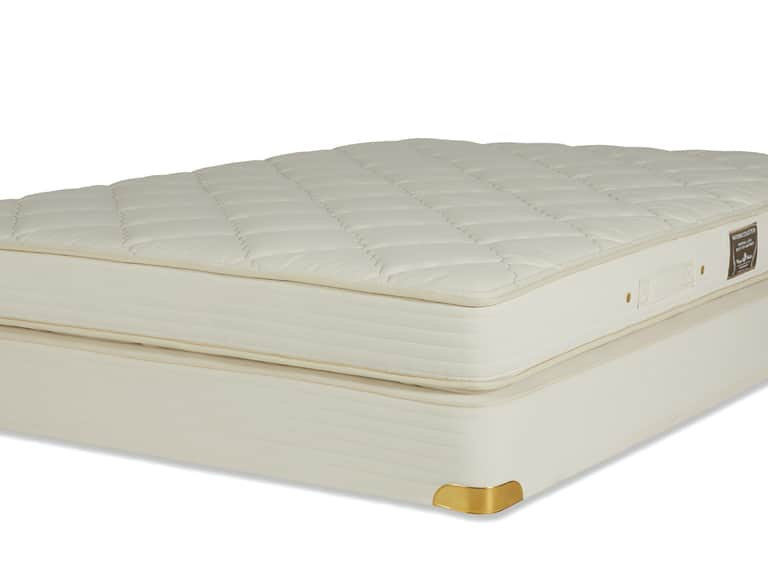
For example, the Royal-Pedic Natural Latex Quilt-Top Mattress with Canvas Ticking is described as compatible with an adjustable bed base and approximately nine inches thick. That stated thickness is a helpful starting point for measuring, but the actual fitted-sheet depth should be based on the complete setup, including any additional layer placed on the mattress.
Compatibility does not mean that every sheet will work equally well. A mattress may be suitable for an adjustable base while a particular sheet still has inadequate pockets, weak elastic, or too little ease for articulation. Evaluate the mattress and bedding as separate components that need to function together.
Care for a longer-lasting fit
Fitted sheets do demanding work at the corners. Each time the bed moves, the fabric and elastic respond to a change in shape and tension. Gentle care can help preserve the construction. Follow the label, avoid harsh washing or drying conditions, and do not stretch the sheet farther than necessary while making the bed.
Rotate between sheets if you have more than one set. Alternating use gives fabric and elastic time away from nightly tension and makes laundering easier to schedule. When removing a sheet, release each corner rather than yanking the fabric from one side. Store sheets clean and fully dry, and inspect seams and elastic periodically for signs of wear.
Replace a sheet when its elastic no longer holds, the corners repeatedly slip despite correct sizing, or the fabric has weakened at the seams. A worn sheet can become frustrating even if it once fit well. Conversely, do not discard a sheet solely because the bed is adjustable: if measurements, pocket depth, and construction are suitable, it may continue to perform reliably.
A practical checklist before buying
Use this checklist when shopping for adjustable bed sheet fit. Product descriptions vary, so look beyond broad labels and confirm the details that match your own mattress.
- Bed size: Does the sheet match the mattress’s actual length and width?
- Total depth: Have you included mattress pads, toppers, and protectors the sheet needs to cover?
- Pocket range: Does the stated depth accommodate the finished mattress without excessive slack?
- Elastic: Is it securely constructed and positioned to hold the corners in place?
- Articulation: Can the bed raise and lower without pulling the sheet loose or creating severe bunching?
- Care: Can you follow the laundering instructions without risking avoidable shrinkage or damage?
- Safety: Does the bedding remain clear of moving joints and the base mechanism?
The comfort of a sheet that works with the bed
An adjustable bed turns sheet selection into a small exercise in observation. Measure the mattress as it is actually used, choose pocket depth for the full stack of bedding, and pay attention to elastic and corner construction. Then test the fit while the base moves, not only while the mattress lies flat.
These steps help avoid the common cycle of smoothing, retucking, and waking to a slipped corner. A well-chosen fitted sheet should accommodate the mattress without unnecessary strain, remain anchored through ordinary adjustments, and keep its surface comfortable. When dimensions, materials, care, and movement are considered together, the result is simple but valuable: bedding that follows the bed rather than fighting it.