Bedding · Pillow buying guide
Pillow Loft and Fill: Choosing Support for a Refined Sleep Space
A pillow is a small landscape beneath the head: a place where posture, material, temperature, and habit meet. The right one does more than feel soft. Its loft and fill help keep the head and neck comfortably supported, while its fabric and care needs determine how it fits into the larger rhythm of a well-made bed.
At bedtime, a pillow may seem like the simplest part of the sleep environment. It waits at the head of the mattress, tucked into a case, ready to receive the weight of the day. Yet its shape can change subtly under pressure, and its support depends on several factors working together: the depth of the pillow, the material inside it, the way that material responds to movement, and the position in which a person usually sleeps.
That is why choosing a pillow by softness alone can be misleading. A very plush pillow may compress until it offers little support; a firm, lofty one may hold the head at an uncomfortable angle. The goal is not to find a universally perfect pillow, but to identify a combination of loft and fill that suits your body, sleeping position, mattress, and preferences.
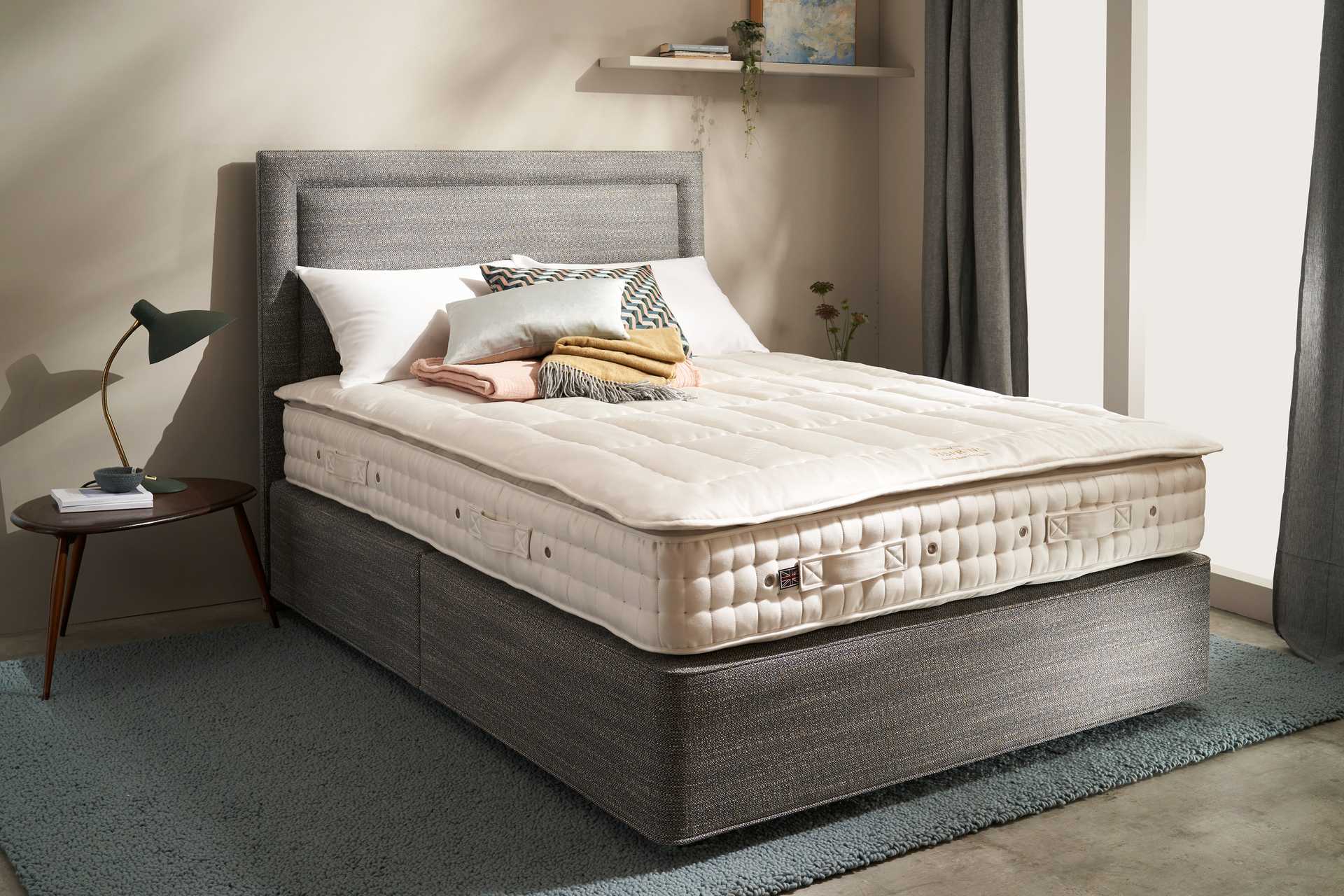
In a thoughtfully arranged sleep space, comfort and appearance need not compete. A supportive pillow can sit beneath a smooth cotton pillowcase or a silk cover, while a decorative cushion adds a finishing layer for daytime. Understanding what happens inside the pillow makes it easier to choose an option that feels good at night and looks considered by day.
What pillow loft means
Loft describes a pillow’s height, or how much space it creates between the head and the mattress. It is often described as low, medium, or high, but these labels are not standardized across every maker. A pillow’s advertised loft may also differ from its effective loft: the height it maintains once a sleeper’s head presses into it.
Think of loft as a piece of a larger alignment puzzle. When lying on your side, the pillow generally needs to fill the space between the shoulder and the head so the neck does not slope sharply toward the mattress or bend upward. On the back, a lower or more gently contoured profile may help keep the head from being pushed too far forward. Stomach sleepers often prefer a thin, compressible pillow—or sometimes no pillow beneath the head—because a tall one can turn the neck sharply to the side.
These are starting points, not rules. Shoulder width, head size, the firmness of the mattress, and the way a person settles into the bed all affect the space that needs filling. A softer mattress may allow the shoulder to sink farther on the side, changing the gap beneath the neck. A firmer surface may leave the shoulder higher and call for a different pillow height.
For a practical test, lie in your usual position with the pillow you are considering. Notice whether your head feels tilted up, dropped down, or comfortably level with your upper body. Ask whether the pillow stays supportive when you roll or shift. A mirror or a second person’s observation may help, but comfort over several nights matters more than a brief showroom impression.
Sleep position as a starting point
Sleep position offers a useful first filter when comparing pillows. Many people move through more than one position during the night, so the aim is not to lock the body into a pose. Instead, consider the position in which you spend the most time and whether the pillow remains comfortable as you turn.
| Usual position | A useful loft direction | What to notice |
|---|---|---|
| Side | Often medium to higher, depending on shoulder width and mattress sink | Whether the head feels level rather than angled toward or away from the mattress |
| Back | Often low to medium, with enough support to avoid the head tipping forward | Whether the chin feels comfortably neutral rather than tucked toward the chest |
| Stomach | Usually low and compressible | Whether a taller pillow creates strain as the head turns to one side |
| Combination | Adjustable or adaptable designs may be worth exploring | Whether the pillow can accommodate changes in position without feeling lumpy or unstable |
The table is a guide, not a prescription. If you wake with persistent discomfort, numbness, or pain, a pillow change may not be the whole answer. Sleep-related symptoms can have many causes; persistent or concerning problems are best discussed with a qualified health professional rather than attributed to bedding alone.
How fill changes the feel
Fill is the material inside the pillow. It affects not just softness, but also resilience, shape retention, airflow, weight, adjustability, and care. Two pillows with similar listed loft can behave very differently: one may flatten quickly beneath the head, while another holds its shape or springs back when pressure lifts.
Down and feather
Down consists of the soft clusters found beneath the outer feathers of waterfowl. It is known for a light, lofty feel and can be fluffed and reshaped. Feather fill generally has more structure and may feel firmer or heavier, though the exact result depends on the blend and construction. A down or feather pillow may suit someone who likes a pillow that can be folded, scrunched, or refreshed with a shake.
The trade-offs are personal and practical. Some sleepers prefer a more stable, less yielding surface, and some have sensitivities that make these fills unsuitable. Check the care label and the maker’s material disclosures; washing directions vary, and thorough drying is important for washable products. A pillow protector can help limit everyday soil and extend the time between deeper cleaning.
Down alternatives and polyester fiber
Synthetic fiber fills are available in a wide range of densities and constructions. They may be designed to approximate the softness of down, and many are easy to wash according to their labels. Their feel, breathability, and ability to keep their loft vary considerably, so the words “down alternative” alone do not tell the whole story. Look for information about fill weight, construction, and care rather than relying on a broad category name.
Memory foam
Memory foam responds to pressure and warmth, creating a more defined, contouring feel than loose fiber. Some pillows use a single molded piece; others contain shredded foam that can be shifted or removed. The molded form can feel steady, while shredded versions may offer more adjustability. Foam may also retain more warmth than some airy fills, though design, cover fabric, room conditions, and individual comfort all play a role.
A foam pillow’s shape is not necessarily a good fit just because it looks ergonomic. Test whether its contour corresponds with your preferred position and whether its height feels right when you lie down. Follow the care label closely: some foam components are not machine washable, even when a removable cover is.
Latex
Latex pillows tend to feel resilient, buoyant, and supportive rather than deeply compressible. Depending on their construction, they may be solid or shredded, with different levels of air movement and adjustability. People who enjoy a pillow that pushes back slightly may find this character appealing. Natural and synthetic latex are distinct materials, so check product descriptions for composition and any relevant allergy information.
Wool, cotton, and other natural fills
Wool and cotton fills can offer a comparatively substantial, less springy feel. They may compress differently from down or foam and are not always adjustable once enclosed. Some natural fills are valued for their moisture-handling or temperature characteristics, but no material can guarantee a cool night in every room or for every sleeper. Construction, cover, climate, and personal heat sensitivity influence the experience as much as the fill name.
Firmness is not the same as loft
Loft and firmness are often discussed together, but they describe different things. Loft is height; firmness is how resistant the pillow feels when pressed. A high-loft pillow can be soft and compress substantially, while a lower pillow can feel quite firm. This distinction matters because a pillow that seems tall on the bed may collapse under the head, and one that looks modest may maintain a steady profile.
When comparing options, consider how the pillow behaves under actual load. Does it cradle the head, hold it up, or shift away as you move? Does its fill bunch into corners, or remain evenly distributed? For adjustable pillows, check whether the fill can be removed in small increments and whether the package includes guidance for keeping the remaining material balanced.
If possible, test a pillow with the mattress and pillowcase arrangement you use at home. The case can compress or constrain the fill, particularly if it is too small. A pillow that is overly tight inside its cover may feel denser and taller than expected; one inside an oversized case may shift more freely.
Temperature, touch, and the pillowcase
A pillow is part of a small climate system around the face and neck. Cover fabric, fill, room temperature, humidity, and bedding layers all influence how warm or cool it feels. Breathable cotton percale, smooth cotton sateen, linen, and silk each have distinct textures and drape, but the fabric alone cannot determine whether a sleeper will feel comfortable through the night.
A close-woven, crisp cotton case may feel cool and dry to the touch; a silk case brings a smooth, fluid surface; linen has a more textured hand that softens with use. Choosing among them is partly a matter of sensation and partly of care. Read washing instructions before buying, and consider whether the fabric can tolerate frequent laundering in your household routine.
A protective encasement can be useful beneath the decorative pillowcase, especially when the pillow itself is difficult to wash. Select one that fits without pulling the pillow into an unnatural shape. For a composed bed, pillowcases can echo the sheets or introduce a quiet contrast in texture or color, while the pillow’s hidden support remains a matter of fit and function.
A careful way to choose
Pillow shopping becomes less mysterious when you treat it as a process of observation rather than a search for the most expensive or most heavily advertised option. Begin with the position you most often wake in, then consider the mattress, your temperature preferences, and how much maintenance you are willing to manage.
- Start with position. Use your usual sleep posture to estimate the kind of gap the pillow must fill, while remembering that bodies move overnight.
- Compare effective loft. Ask how high the pillow remains when compressed, not only how tall it appears when fluffed.
- Choose a fill by feel and upkeep. Consider resilience, weight, adjustability, washability, and whether the material suits your sensitivities.
- Check dimensions. Match pillow size to the bed and pillowcase, and confirm that a fitted case will not squeeze the fill excessively.
- Review trial and return terms. A few nights may reveal more than a brief test, but hygiene and return rules differ between sellers.
- Give a new pillow time. A different material can feel unfamiliar at first. Keep notes on comfort and wake-up symptoms rather than changing several parts of the sleep setup at once.
When trying a new pillow, make one adjustment at a time. If you replace the mattress, pillow, topper, and sheets in the same week, it can be difficult to tell which change helped or hindered comfort. A measured approach makes the result easier to understand and reduces the chance of choosing based on first impressions alone.
Care that preserves shape and freshness
Pillows collect skin oils, perspiration, dust, and traces of everyday use. Care begins with the label: fill materials and constructions respond differently to water, heat, and agitation. Some pillows can be machine washed; others require spot cleaning or professional care. A removable outer cover is not proof that the inner pillow is washable.
Use a pillow protector if the maker permits one, launder pillowcases regularly, and allow the pillow to air when practical. Follow drying instructions carefully, because trapped moisture can affect freshness and the integrity of some fills. Avoid aggressive heat unless the label specifically allows it. For foam, respect any instructions against soaking or machine washing.
Over time, a pillow may lose its shape, develop persistent odors, or stop offering the support it once did. There is no single replacement timetable that fits every pillow; material, use, care, and personal comfort determine its useful life. A simple check is to examine whether it returns to shape, remains evenly filled, and still supports your head in your usual position.
Bringing function into a refined sleep space
A considered bedroom is not made by stacking the largest number of pillows. It is made by giving each layer a purpose. The pillow used for sleep should be selected for support; a second pillow may offer a different height or texture for reading, and decorative cushions can be removed easily at night. This distinction keeps the bed inviting without turning its arrangement into an obstacle.
For a calm visual effect, coordinate pillowcases with the sheets through tone, texture, or a restrained contrast. Crisp cotton can bring structure to a soft duvet; linen can add a relaxed, tactile layer; silk can introduce a subtle sheen. Keep comfort central: a beautiful case cannot correct an unsuitable loft, and a well-chosen pillow need not be hidden beneath decorative layers.
The most refined sleep space is often the one that supports ordinary routines without fuss. A pillow that suits the sleeper, a case that feels pleasant against the skin, and a care plan that is easy to maintain can do more than an elaborate arrangement. When the lights dim, the bed becomes less a display and more a landscape for rest—quiet, familiar, and shaped around the person who sleeps there.
The short version
Pillow loft describes height; fill determines much of the pillow’s feel, resilience, adjustability, and care. Side sleepers often begin by considering greater loft, back sleepers a moderate or lower profile, and stomach sleepers a thin, compressible option—but mattress firmness, body shape, and personal comfort can change the equation.
Treat these categories as a map, not a verdict. Test the pillow in your usual position, assess how it behaves under pressure, and give attention to its cover and care needs. The best pillow is not simply the softest, tallest, or most luxurious-looking. It is the one that supports a comfortable, natural-feeling position and belongs easily in the sleep environment you can maintain.